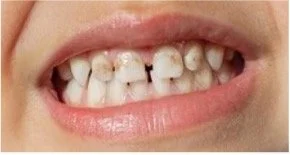
Enamel Hypoplasia
Enamel is the strong, protective outer layer of the tooth. It is the shield that helps teeth stay healthy through daily chewing, acids, and bacteria. When a child has enamel hypoplasia, that shield does not form completely. You might notice white spots, yellow or brown discoloration, small pits or grooves, or areas where enamel looks thin, chipped, or missing. In more severe cases, the enamel does not develop at all.
Because these teeth have surface irregularities, they tend to be more sensitive to temperature changes or sweets. They can wear down more quickly from grinding and are more likely to trap plaque and bacteria. Weakened enamel also makes the teeth more vulnerable to cavities since it is less able to withstand the “acid attacks” that come from sugary foods and drinks.
If you ever see a spot or defect on your child’s tooth, it is important to have it evaluated by a pediatric dentist. Regular monitoring helps us identify changes early and decide whether treatment is needed. Depending on the severity of the hypoplasia and your child’s comfort level during dental visits, treatment may include protective sealants, desensitizing agents such as Silver Diamine Fluoride (SDF), tooth colored composite fillings, or full coverage crowns. If these weakened areas are not treated, they can progress to decay, pain, or infection.
A baby tooth with hypoplasia does not necessarily mean the permanent tooth will be affected. Primary and permanent teeth develop at different stages, so the timing of the disruption plays an important role. There is a wide range of reasons why enamel may not form completely. These can include genetic influences, early nutritional deficiencies, medical conditions during pregnancy or early childhood, preterm birth, low birthweight, trauma, infections, or other systemic illnesses.
For children with hypoplastic teeth, prevention becomes even more important. We recommend brushing twice daily with fluoridated toothpaste, limiting sugary snacks and drinks, especially sticky treats, and visiting your dentist every six months for checkups, cleanings, and fluoride applications to strengthen the enamel that is present.
Our goal at Smiles For Kids is to keep every child comfortable, confident, and healthy as they grow. If you ever have concerns about your child’s enamel or notice something unusual, we are always here to help.
Dr. Theriot and our Smiles For Kids Team